
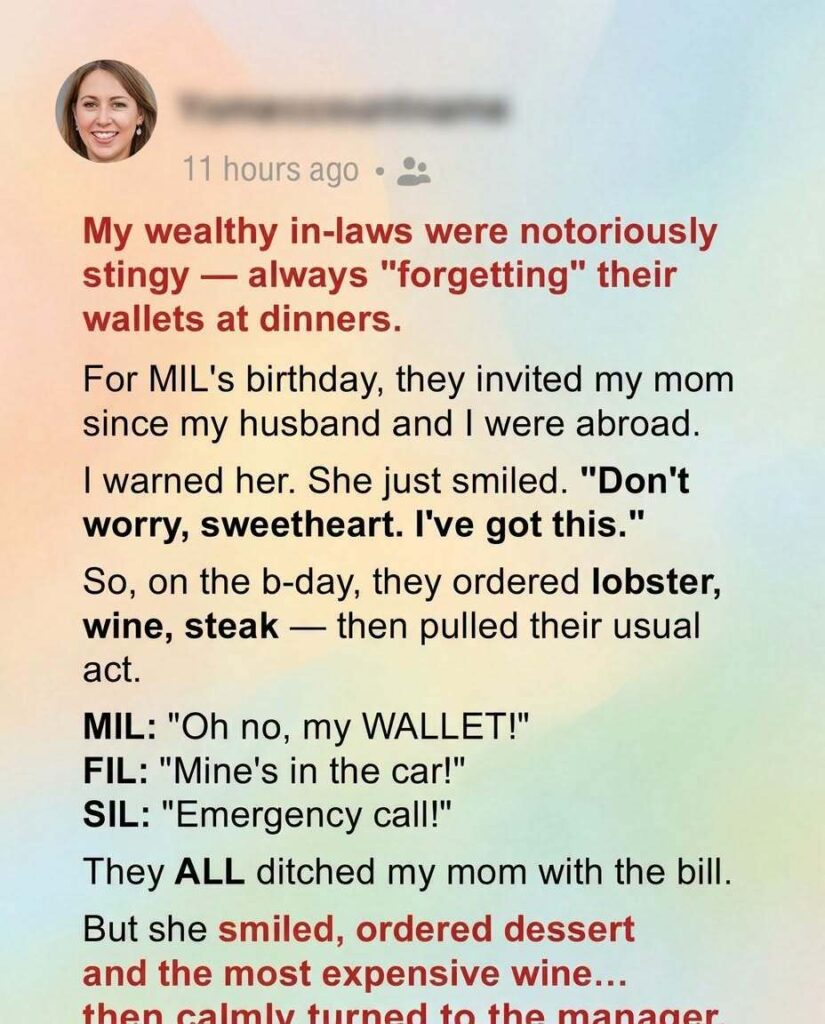

My mom looked at the manager and calmly asked for separate checks based on exactly what each person had ordered. Then she explained that the birthday group had left without paying and gave him their names, phone numbers, and the reservation information. Because my mother had ordered only a modest entrée before everyone disappeared, she paid for her own meal, dessert, and wine, then left a generous tip. The manager assured her that the restaurant would handle the unpaid portions directly. My mom walked out smiling, while my in-laws apparently assumed they had successfully dumped another expensive dinner on someone else.
The next morning, my MIL called me furious. The restaurant had contacted her and informed her that the unpaid balance—more than $900—was attached to the reservation made in her name. When she refused to pay, the manager reminded her that security cameras clearly showed the entire group eating before leaving. My FIL insisted my mother had “agreed to cover everything,” but she had never said anything of the sort. She had simply attended the dinner they invited her to. Suddenly, their favorite little trick of conveniently forgetting their wallets wasn’t funny anymore.
What made it even better was that my mom had recognized the restaurant manager. Years earlier, she had worked with his mother at a local charity, so he knew immediately she wasn’t trying to avoid responsibility. He even called her afterward to make sure nobody was pressuring her for money. Meanwhile, my husband was horrified when I told him what his family had done. He called his parents and told them they were never pulling that stunt with either of our families again.
A week later, my MIL finally paid the restaurant after realizing the manager wasn’t backing down. She then sent my mother a long message saying she had embarrassed the family. Mom replied with just one sentence: “I paid for what I ordered. You should try it sometime.” After that, strangely enough, my in-laws never “forgot” their wallets at dinner again.