
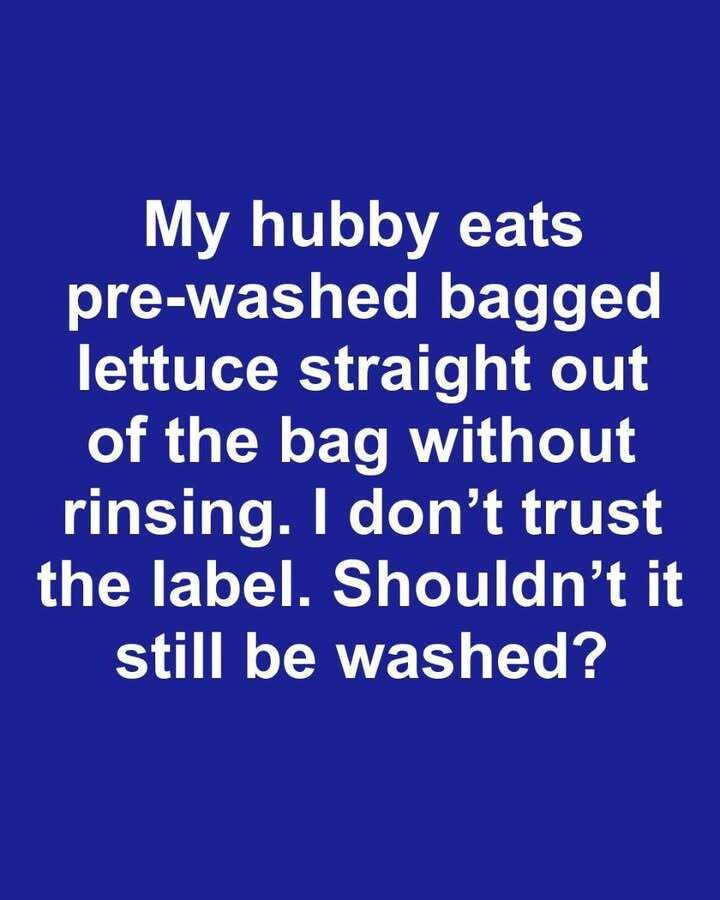

If a bag of lettuce is clearly labeled “pre-washed,” “triple-washed,” or “ready-to-eat,” you generally do not need to rinse it again before eating. Commercial salad greens are typically washed under controlled conditions before packaging, and they are intended to be eaten straight from the bag. Washing them again at home doesn’t guarantee the removal of every possible microorganism, and surprisingly, it can sometimes create another opportunity for contamination if your sink, colander, hands, or countertops aren’t perfectly clean.
That doesn’t mean packaged lettuce is completely risk-free. Leafy greens can occasionally be involved in foodborne-illness outbreaks because contamination can happen during growing, harvesting, processing, or packaging. Rinsing at home also cannot reliably remove bacteria that may already be firmly attached to the leaves. That is why checking the package is important. Avoid bags that are swollen, damaged, leaking, or well past their use-by date, and keep packaged greens refrigerated according to the label instructions.
If the package doesn’t say the lettuce has been washed or is ready to eat, then rinsing it under clean running water before eating is a sensible step. There’s no need to use soap, detergent, or household cleaners on produce. After washing, clean hands, utensils, cutting boards, and preparation surfaces also matter because cross-contamination from raw meat or dirty kitchen equipment can introduce germs after the lettuce has already been cleaned.
So in this particular argument, your husband isn’t necessarily doing anything wrong. If the bag truly says the lettuce is pre-washed and ready to eat, eating it directly from the package is generally exactly how the manufacturer intends it to be used. If you still prefer rinsing it for peace of mind, use a thoroughly cleaned colander and clean running water—but it isn’t normally required.