
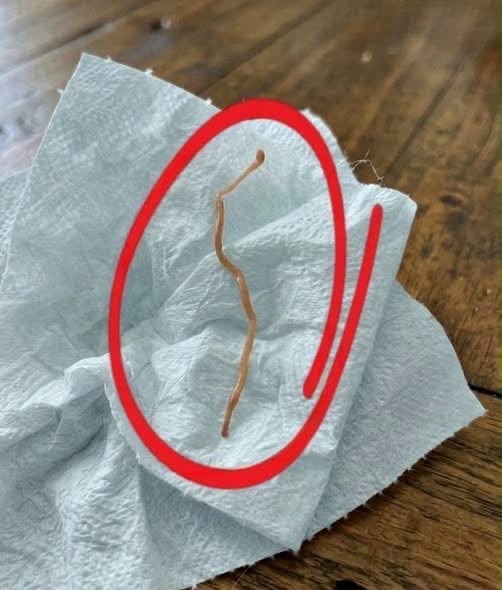

Finding a long, thin strand on a piece of pork can be unsettling, especially when it looks a little too much like a worm. But in many cases, something like the object in this photo is more likely to be a blood vessel, nerve, or strand of connective tissue that separated from the meat during trimming or cooking. Pork contains plenty of fibrous structures that can become much more noticeable once the meat is cut apart. A vessel or connective strand may appear pale, tan, pinkish, or brown and can sometimes stretch several inches.
One important point is that some of the parasites people associate with pork would not normally look like this. For example, Trichinella larvae are microscopic and cannot be spotted as long worms with the naked eye. Certain other parasites can produce visible abnormalities in meat, but they often appear as cysts or unusual lesions rather than one smooth, loose strand. That means seeing something string-like does not automatically mean the pork is contaminated with a parasite.
Still, nobody can identify an unknown structure with complete certainty from a photograph alone. If something looks unusual, moves, appears embedded throughout the meat, or is accompanied by a bad odor, strange discoloration, or other signs of spoilage, the safest choice is not to eat it. You can keep the packaging and contact the store or meat supplier if you want the product examined or replaced.
For ordinary pork, proper cooking remains important regardless of what you see. Whole cuts of pork should reach a safe internal temperature before eating, and ground pork requires more thorough cooking. So while the strand in this picture looks alarming, its appearance is consistent with normal animal tissue rather than the kind of parasite many people immediately fear.

