
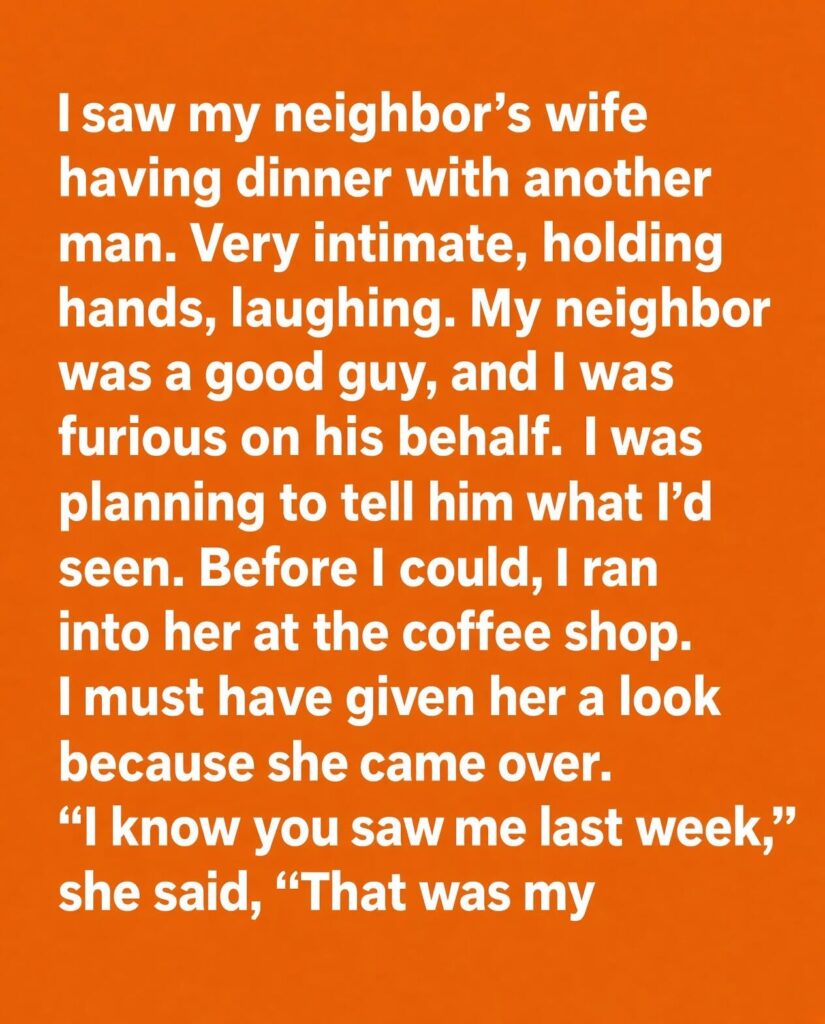

“That was my brother,” she said quietly. I stared at her, convinced she was making up the first excuse that came to mind. I had known her and her husband, Mark, for years and had never once heard her mention a brother. Then she pulled out her phone and showed me a photograph taken nearly thirty years earlier. There she was as a little girl, standing beside the same man I had seen at the restaurant. She explained that his name was Daniel and that they had been separated as children after their parents’ divorce. Their father took Daniel across the country, and eventually the two siblings lost contact completely.
Three months earlier, Daniel had finally found her through an old family friend. She hadn’t told Mark yet because their reunion had brought up painful memories she wasn’t ready to explain. The dinner I witnessed had been only their second meeting. When I asked why they were holding hands, her eyes filled with tears. Daniel had just told her that their father had passed away years earlier and left behind a box of letters he had written to her but never sent. Her brother had brought the letters to dinner, and she had broken down while reading them.
I immediately felt ashamed. I had spent days building an entire story around a few minutes I had witnessed from across a restaurant. She could tell exactly what I had assumed, but surprisingly, she wasn’t angry. Instead, she admitted that keeping Daniel secret from Mark had created its own problem. She asked if I would give her until that evening to tell her husband herself.
The following morning, Mark knocked on my door. I expected an uncomfortable conversation, but he simply smiled and said, “Apparently, I have a brother-in-law.” Then he thanked me for not jumping to conclusions publicly. That experience taught me something I’ve never forgotten: sometimes what looks obvious from across a room is only one tiny piece of a much larger story.

