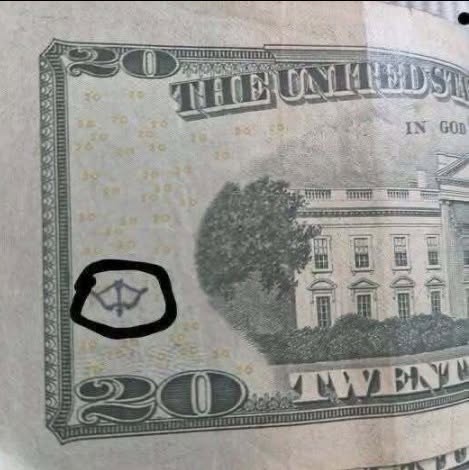

If you’ve ever noticed a strange symbol stamped onto a U.S. bill, you might wonder whether you’ve discovered a rare printing error or some hidden government marking. The small “bow and arrow” symbol shown on this $20 bill, however, is not an official feature added by the U.S. Treasury or Federal Reserve. It appears to be a privately added stamp or marking, often referred to by collectors as a chop mark or counterstamp. These marks can be placed on currency after it has entered circulation.
Chop marks have a long history. Money changers, businesses, casinos, banks, and other people handling large amounts of cash have sometimes stamped notes as a way of showing that they had inspected, counted, or accepted them. Similar practices are especially well known on old coins and on currency circulating internationally. The designs can be almost anything—letters, numbers, stars, animals, geometric patterns, or unusual symbols that resemble things such as arrows. Without knowing exactly who applied this particular mark, its specific meaning may be impossible to determine.
The important thing is that the symbol itself usually doesn’t make the bill fake. U.S. currency regularly picks up writing, stamps, stains, and other markings while circulating. A marked bill can generally remain usable as long as enough of the note survives for it to be recognized and authenticated. The stamp also doesn’t automatically make it valuable. Most modern marked bills are still worth only their face value unless there is something genuinely unusual about the note or documented historical significance behind the marking.
So there probably isn’t a secret bow-and-arrow message hidden on the $20 bill. Someone likely stamped the symbol onto it sometime after the bill entered circulation. Still, that mystery is part of what makes circulated currency interesting—every strange stamp, note, or mark may be evidence of somewhere that bill traveled before eventually reaching your wallet.