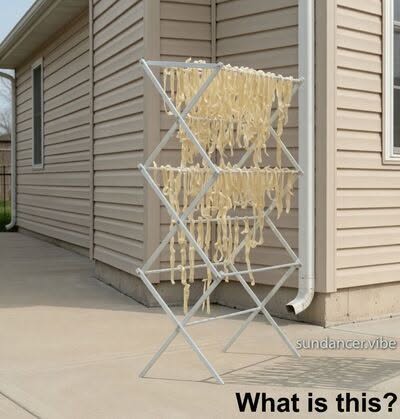

Those pale, ribbon-like strands hanging from the folding rack are most likely homemade noodles or pasta being dried in the sun and fresh air. Before packaged pasta became the norm, many families regularly made noodles at home using a simple dough of flour, eggs, water, and sometimes salt. After rolling the dough thin and cutting it into long strips, the noodles had to dry before they could be stored. A rack like the one in the photo gives each strand enough space for air to circulate around it.
Drying homemade noodles helps remove moisture, which improves their texture and can allow them to keep longer than freshly cut pasta. Depending on the recipe, some people dry noodles only until they become firm enough to cook later that day, while others let them dry much longer before storing them in airtight containers. The hanging method also keeps the strands separated so they don’t stick together in one large clump while they’re still soft.
The setup may look unusual if you’ve never seen pasta made traditionally, but similar techniques are used all over the world. Italian pasta, Eastern European egg noodles, Asian-style noodles, and many regional homemade recipes are sometimes hung over wooden poles, chairs, racks, or special pasta dryers. Some families even continue the practice simply because they prefer the texture and flavor of homemade noodles over store-bought ones.
So your neighbor probably isn’t leaving anything mysterious outside. The rack appears to be covered with freshly made noodles drying before cooking or storage. If they’ve been outside for weeks, they may be making repeated batches rather than drying the exact same noodles that entire time. What looks like a strange backyard ritual is actually a very old-fashioned—and still popular—way of preparing homemade pasta.