
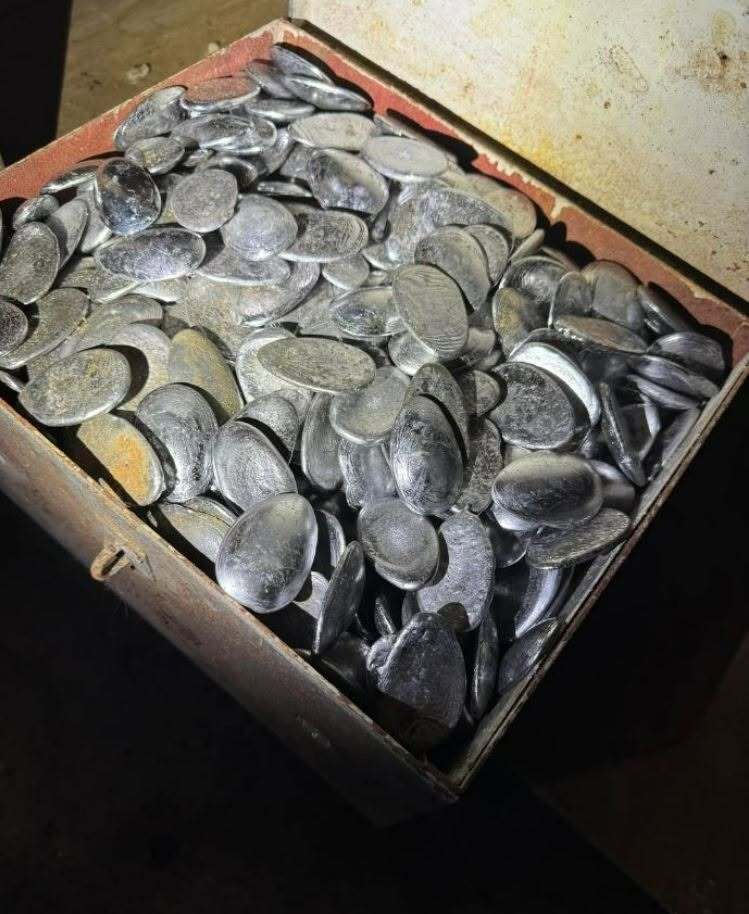

At first glance, the box looks as though it’s filled with hundreds of old coins, but the pieces appear to be lead slugs or rough cast lead blanks rather than currency. Their irregular oval shapes, dull gray color, and slightly flattened surfaces are typical of soft lead that has been poured or formed into small reusable pieces. Similar collections were sometimes stored in workshops and basements because lead was valuable as a practical material and could easily be melted down and reshaped for another job. Phitip Recipes
Before modern materials became common, people used lead for all kinds of household, trade, and hobby purposes. Small pieces could be melted and turned into fishing sinkers, counterweights, repair pieces, casting material, or other custom objects. Someone doing regular metalworking might keep scrap lead instead of throwing it away, gradually building up a box exactly like this one. That may explain why there are so many pieces even though they don’t appear to have one obvious finished purpose.
They shouldn’t be mistaken for valuable silver coins simply because of their metallic appearance. Lead is very dense and relatively soft, so old pieces can become scratched, dented, oxidized, and misshapen over decades. Without markings, measurements, or information about where the box came from, it’s difficult to determine exactly what the original owner intended to make with them.
One thing is worth taking seriously: old lead should be handled carefully. Avoid sanding, grinding, or melting unidentified pieces, because lead dust and fumes can be hazardous. Wash your hands after handling them and keep them away from children. So the mysterious basement treasure probably isn’t a forgotten fortune—but it may be a fascinating box of old casting lead left behind by someone who once used the basement as a workshop.