
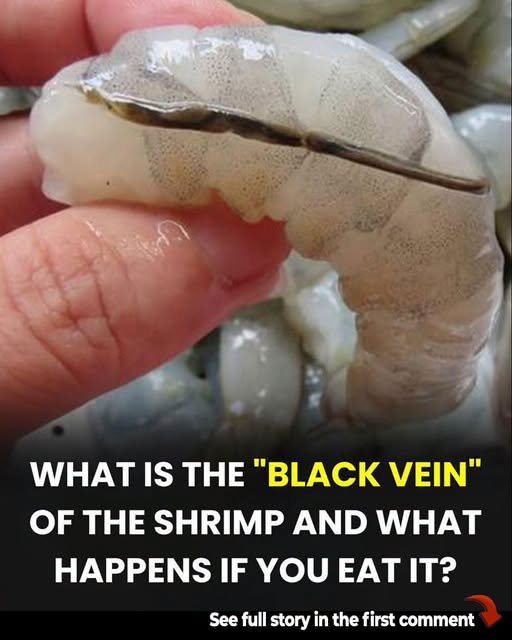

That dark line running along the back of a shrimp is commonly called the “vein,” but it isn’t actually a vein at all. It is the shrimp’s digestive tract, or intestine. Depending on what the shrimp recently ate, the line can appear black, brown, gray, or sometimes barely visible. Because shrimp feed on tiny organisms and material from their environment, the digestive tract may contain partially digested food, sand, or other material. That is why many people prefer to remove it before cooking, especially when it looks particularly dark or thick.
Eating the digestive tract is generally not considered dangerous by itself when the shrimp has been properly handled and thoroughly cooked. In many parts of the world, shrimp are routinely cooked and eaten without being deveined. The main reason restaurants and home cooks remove the dark line is appearance and texture rather than safety. On larger shrimp, it can occasionally feel gritty because of sand or sediment inside the digestive tract, which can make the shrimp less pleasant to eat.
To remove it, cooks usually make a shallow cut along the shrimp’s back and gently pull the dark strand out using the tip of a knife, toothpick, or fingers. This process is called deveining. You may also notice another lighter-colored line along the underside of the shrimp. That structure is part of its nervous system and normally doesn’t need to be removed. So seeing a line inside raw shrimp doesn’t mean the seafood is spoiled or contaminated.
The more important safety issue is how the shrimp has been stored and cooked. Raw shrimp should remain properly refrigerated and should be discarded if it develops a strong unpleasant odor, unusual sliminess, or other obvious signs of spoilage. Cook shrimp until the flesh becomes opaque and appropriately firm. So the famous “black vein” may look unappetizing, but if you accidentally eat it in properly cooked shrimp, there is usually no reason to panic.

